-
AI is a civilizational shift, not just a technological upgrade, and it is already reshaping how young people learn and form identity.
-
Many K–12 schools and colleges will be hollowed out because they offer content and processes that AI can replicate faster, cheaper, and often better.
-
Focusing only on AI as a “cheating tool” misses its deeper impact on attention, discernment, and spiritual/moral formation in students.
-
“truth” (lowercase) is becoming unstable under algorithm-driven personalization, while capital-T “Truth” (timeless, moral, biblical) will grow more valuable and scarce.
-
Educational models that will endure are those rooted in formation, clear purpose, and moral clarity—not those built merely on information transfer or credentials.
-
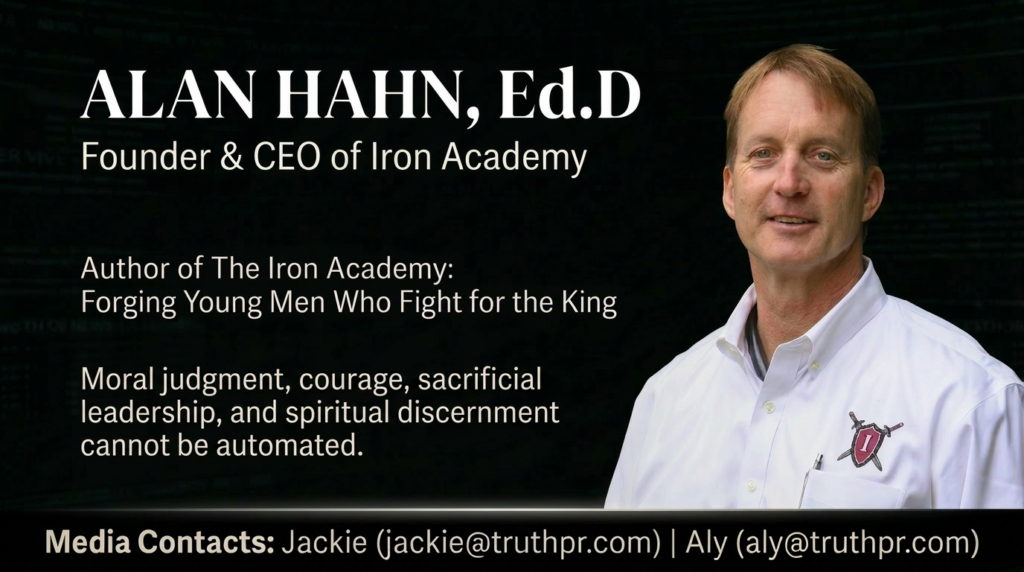
Certain human capacities—such as deep moral judgment, sacrificial leadership, courage, and spiritual discernment—cannot be automated and must be intentionally formed.
-
Parents, churches, and local leaders must rebuild strong, community-based institutions that can withstand AI’s disruption and provide stable identity and belonging.
-
Young people are not being adequately prepared for an AI-dominant workforce, especially in resilience, critical thinking, and character; formation must be prioritized in the next 5–10 years.
-
Christians who are clear-headed and intentional are uniquely positioned to steward formation, discernment, and leadership in this AI moment because of their grounding in transcendent Truth.
-
For Christians anxious about AI or seeing it through an end-times lens, Alan reframes this as a moment for faithful preparation, practical steps at home and church, and hopeful, courageous engagement rather than fear.