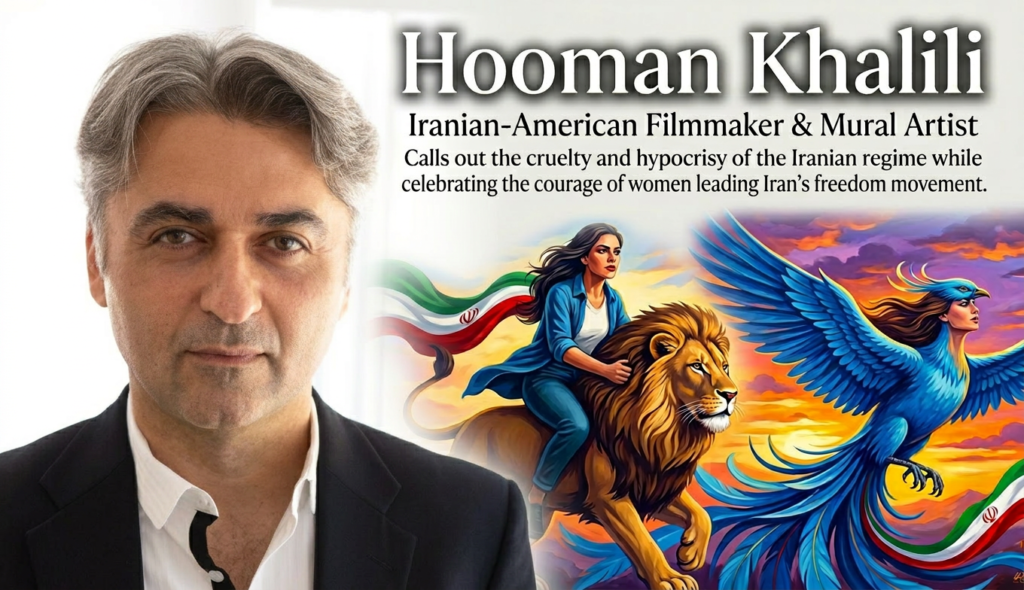
Hooman Khalili

Expert Topics:

  • Reuniting Iran and Israel as friends, emphasizing a 3,000-year history of Persian–Jewish kinship and shared biblical roots.

  • Honoring women of Iran through murals inspired by Mahsa Amini and the “Woman, Life, Freedom” movement, spotlighting regime violence and women killed in protests.

  • Using Oct. 7–themed art to connect Israeli and Iranian stories, including murals of Israeli-Iranian soldier Shirel Haim Pour and an Iranian protester maimed by the regime.

  • Elevating Queen Esther and the concept of “Esthers of the World, Rise Up” as a symbol of courageous women standing up to tyranny.

  • Explaining the spiritual and biblical connection between Jerusalem and ancient Elam (in modern Iran) as a theological basis for Jewish–Persian friendship.

  • Raising global awareness about the oppression of women in the Islamic Republic, including allegations of poison gas attacks on Iranian schoolgirls.

  • Demonstrating that Israel stands with the women of Iran, highlighting that Israel is the only Middle Eastern country allowing these anti-regime murals.

  • Using “mural diplomacy” and public art as unconventional foreign policy and grassroots PR for Israel, countering what he calls Israel’s “terrible PR.”

  • The number 18 murals as a symbol of “chai” (“life”) in Jewish tradition, and why that prophetic number defines the scope of his project.

  • His personal story: Iranian-born, raised in California by a church community, Christian faith, and why he has never returned to Iran yet still deeply identifies with the Iranian people.

  • Working with Israeli graffiti artists across Jerusalem, Tel Aviv, Nazareth, Haifa, Netanya, and Mevaseret to create nine completed murals so far.

  • Self-funding the entire project, repeatedly returning to the U.S. to work and finance each new mural, with no institutional or government funding.

  • The Iranian regime’s propaganda response to his work, including Tehran street banners with missiles and the threat “400 seconds to Tel Aviv.”

  • The visit of exiled Crown Prince Reza Pahlavi to one of his murals in Netanya and its significance for the Iranian opposition in exile.

  • What he has learned from Israeli culture about disagreeing passionately yet maintaining love and respect, and how that contrasts with polarization in America.

Hooman Khalili

Iranian‑born visual artist, filmmaker, and creative director based in the San Francisco Bay Area

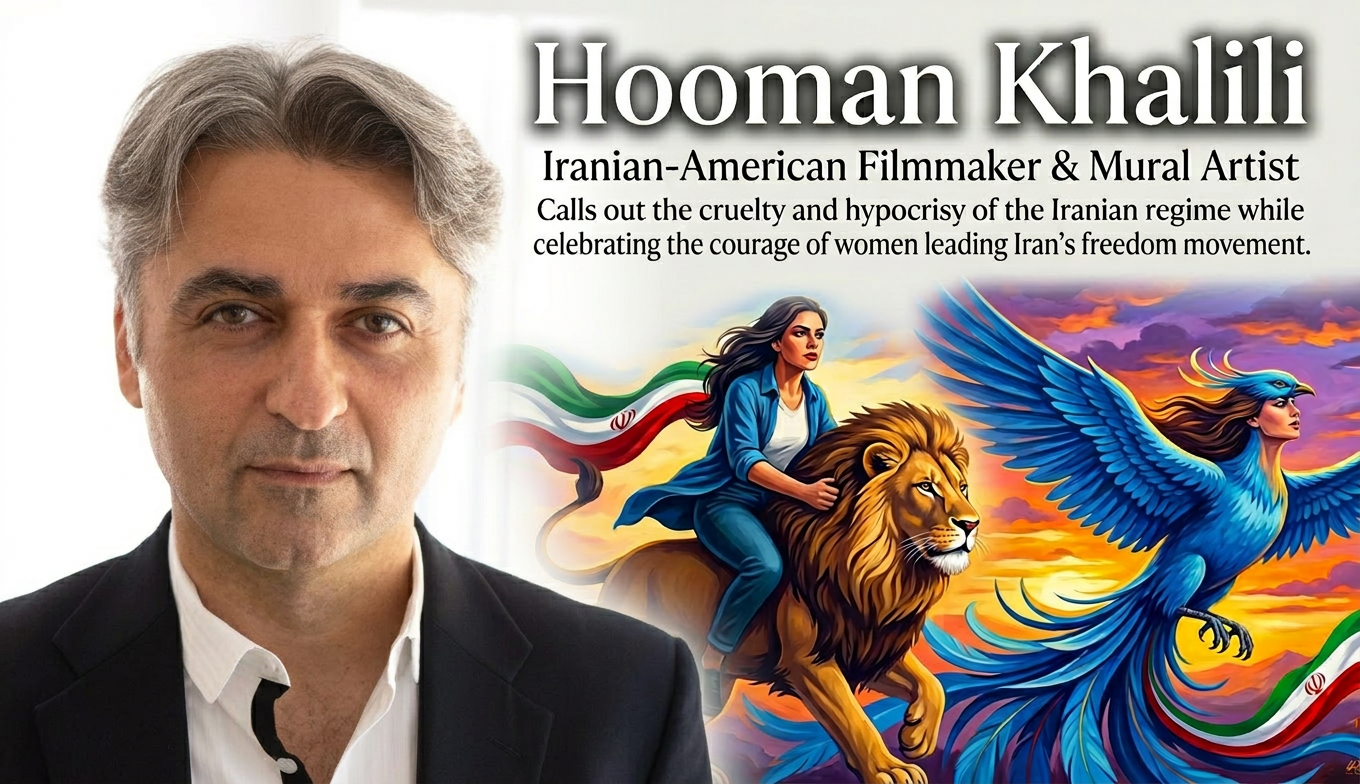
Hooman Khalili is an Iranian‑born visual artist, filmmaker, and creative director based in the San Francisco Bay Area whose current work centers on large‑scale murals about Iran, Israel, and the struggle of Iranian women.

  • San Francisco–based radio personality, filmmaker, and mural artist who spent 21 years on the “Sarah and Vinnie” Morning Show on Alice Radio 97.3 FM (CBS Radio) in the Bay Area.
  • Served as phone screener, on-air movie critic, and celebrity interviewer, conducting red-carpet and press junket interviews for major events including the Grammys, MTV Video Music Awards, Sundance Film Festival, Super Bowl 50, and CBS’s fall TV lineups.
  • Has interviewed dozens of A‑list figures including Dwayne “The Rock” Johnson, Donald Trump, Tom Hanks, Robert Downey Jr., Harrison Ford, Jerry Seinfeld, George Lucas, Maroon 5, 50 Cent, and was the last person to interview Hunter S. Thompson before his death.
  • Collaborated with all major Hollywood studios on the promotion of more than 1,000 films over two decades, building deep relationships across the entertainment industry.
  • Appeared as a voice actor in Pixar’s “Cars,” expanding his reach from radio into animated film.
  • Wrote, directed, and shot “Olive,” the first full-length feature film captured entirely on a cell phone (Nokia N8), which qualified for Academy Award consideration and stars two-time Oscar nominee Gena Rowlands with original songs by Dolly Parton.
  • Created the number-one most-viewed nonpartisan “get out the vote” video for U.S. youth in the 2008 presidential election, earning 5.1 million YouTube views and a place in the Museum of Radio and Television in New York.
  • Frequent speaker and presenter at major festivals and conferences, including Sundance, SXSW, Napa Valley, Sonoma, Mill Valley, LA Film Fest, SF Film Fest, Macworld, the Disposable Film Festival in Washington, D.C., and the Ethiopia Film Festival.
  • Global humanitarian and mission worker who has served in South Africa, Costa Rica, Armenia, Bali, Hong Kong, South Korea, Mexico, Germany, Greece, Uganda, South Sudan, and long-term on the streets of San Francisco with people experiencing homelessness.
  • Former choir director at St. Nicholas Antiochian Orthodox Church in San Francisco and current creative volunteer who makes short movies with terminally ill children battling cancer, using storytelling to bring joy and spark imagination.
  • Conceptualized and leads an international “mural diplomacy” project, designing and installing murals in Israel and the United States to draw attention to the Iranian people’s fight for freedom, including multiple works displayed in Jerusalem.
  • Recognized as a multifaceted creative force whose career spans radio, film, visual art, and humanitarian service, with a consistent focus on amplifying underrepresented voices and causes.
Contact Us

316-644-9538

Bio

Hooman Khalili is an Iranian-born, San Francisco–raised radio personality, filmmaker, and mural artist whose work bridges entertainment, faith, and “mural diplomacy” between the Iranian and Jewish peoples. Over two decades in media and a growing portfolio of high-impact public art, he has built a unique platform that connects Hollywood, Israel, and the global struggle for freedom in Iran.

For 21 years, Hooman was a fixture on the “Sarah and Vinnie” Morning Show on Alice Radio 97.3 FM (CBS Radio) in the San Francisco Bay Area, where he served as phone screener, on-air movie critic, and celebrity interviewer. He covered the Grammys, MTV VMAs, Sundance Film Festival, Super Bowl 50, and numerous CBS TV premieres, interviewing A‑list figures such as Dwayne “The Rock” Johnson, Donald Trump, Tom Hanks, Robert Downey Jr., Harrison Ford, Jerry Seinfeld, George Lucas, and Maroon 5, and he was the last person to interview Hunter S. Thompson before his death. Over the years, he collaborated with every major Hollywood studio, promoting more than 1,000 films and earning a reputation as a trusted partner between filmmakers and audiences.

Hooman’s pioneering spirit in film led him to write, direct, and shoot “Olive,” the first full-length feature movie captured entirely on a cell phone, using a Nokia N8. The film, starring two-time Academy Award nominee Gena Rowlands with original music by Dolly Parton, qualified for Academy Award consideration and drew international attention to the creative potential of mobile filmmaking. He also lent his voice to Pixar’s hit “Cars,” further extending his creative footprint into animation.

In recent years, Hooman has become known globally for his “mural diplomacy” project, a series of public murals in Israel and the United States that honor the 3,000‑year bond between Persians and Jews and amplify the voices of the Iranian people. Drawing from the biblical connection between ancient Elam (in modern Iran) and Jerusalem, and inspired by figures like Queen Esther, his works celebrate “Esthers of the World” and particularly the women leading the “Woman, Life, Freedom” movement against the Islamic Republic. His Oct. 7–themed murals, unveiled across Jerusalem, Tel Aviv, Haifa, Nazareth, Netanya, and Mevaseret, juxtapose Israeli victims and heroes with Iranian protesters maimed or killed by the regime, visually linking their struggles for freedom.

Hooman has committed to creating 18 murals—a number symbolizing “chai,” or “life,” in Jewish tradition—and to date has completed half of them, all without institutional or government funding. He repeatedly returns to the United States to work and self-finance each new mural, partnering on the ground with Israeli graffiti artists and communities. His work has attracted attention from across the Iranian diaspora, including a visit from exiled Crown Prince Reza Pahlavi to one of his Netanya murals, and has drawn propaganda pushback from the regime, which has answered his images with Tehran billboards boasting missiles and the threat “400 seconds to Tel Aviv.”

Beyond media and art, Hooman’s life is shaped by his Christian faith and deep commitment to service. Raised in California by a church community after leaving Iran as a child, he has never returned to his birth country but continues to identify strongly with the Iranian people and their fight for dignity and freedom. He has served on humanitarian missions in South Africa, Costa Rica, Armenia, Bali, Hong Kong, South Korea, Mexico, Germany, Greece, Uganda, and South Sudan, as well as long-term on the streets of San Francisco with people experiencing homelessness. He previously directed the choir at St. Nicholas Antiochian Orthodox Church in San Francisco and today volunteers his creative skills to make short movies with terminally ill children battling cancer.

Across radio, film, public art, and humanitarian work, Hooman Khalili has emerged as a multifaceted creative force who uses storytelling in all its forms to honor the women of Iran, support Israel, and remind the world that Persians and Jews are not enemies but ancient friends.

Videos

Projects

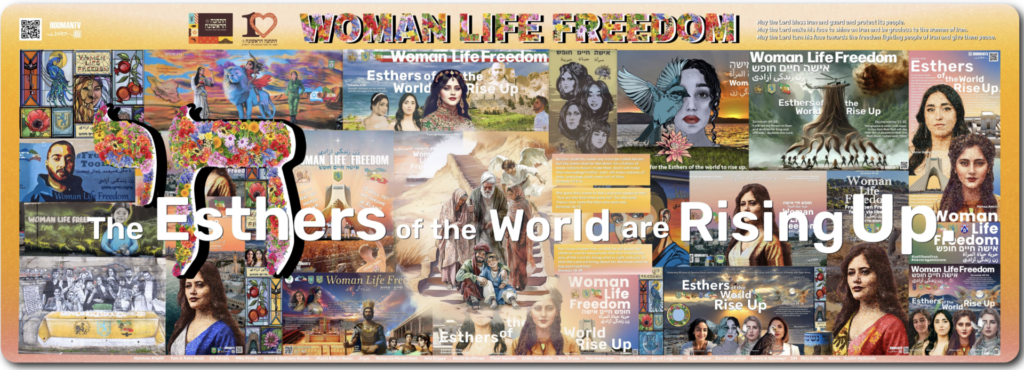
Hooman Khalili’s Woman Life Freedom Mural Project is a global public‑art initiative spotlighting the bravery of Iranian women, honoring Persian–Jewish friendship, and visually opposing the Iranian regime’s oppression. Through a growing series of large-scale murals in Israel, the United States, and beyond, he uses walls as a “street-level foreign policy” campaign linking the Woman, Life, Freedom uprising in Iran with the Jewish and Israeli story.

At the heart of the project are portraits of women—both Iranian and Israeli—who have become symbols of resistance, including Mahsa Amini and Israeli‑Iranian soldier Shirel Haim Pour, whose faces often appear side by side. By pairing victims of Iran’s Islamic Republic with victims of Hamas’s October 7 attack, the murals argue that Persians and Jews are fighting the same extremism and that their suffering and courage are interconnected. Many works carry the banner “Esthers of the World, Rise Up,” invoking Queen Esther as a model for modern women standing up to tyranny.

The project is deeply rooted in biblical imagery, especially verses from Jeremiah that describe God placing His throne in both Jerusalem and Elam, an ancient region in modern Iran. Hooman uses these texts to frame Persians and Jews not as enemies but as ancient allies whose destinies are spiritually linked, reinforcing his goal “to reunite Iran and Israel as friends” after 3,000 years of shared history. Each mural weaves scriptural references, Persian motifs, and Israeli symbols into a single visual language of solidarity.

Hooman initially set a prophetic goal of painting 18 murals—“chai” or “life” in Jewish numerology—and by late 2024 had completed that number across Jerusalem, Tel Aviv, Haifa, Nazareth, Netanya, Mevaseret, and other locations. The work has since expanded, with later pieces such as the Ibim mural near the Gaza border and a major installation at Rice University becoming part of what is now a 19‑plus mural series. These works often feature multiple Iranian and Persian Jewish women whose stories embody the Woman, Life, Freedom movement.

The murals are created in partnership with Israeli graffiti artists and local institutions but are financed almost entirely by Hooman himself, who repeatedly travels back and forth from the U.S. to fund and produce each piece. His Ibim mural near Gaza and his Rice University mural in Houston mark important milestones: one situating Iranian women’s struggle literally on Israel’s conflict-ridden border, the other bringing the message to a U.S. campus and embedding it in a 14,000‑tile mosaic that unites Mahsa Amini and Shirel Haim Pour as shared heroines. Across all of them, the project functions as a loud, colorful insistence that Iranian women, Israeli women, Persians, and Jews stand shoulder to shoulder against the same darkness.


Mural 18

Unveiled October 28th 2024

The final mural is the collage of all 17 murals combined. This series is concluded by summarizing the entire journey and themes of the mural project in a single artwork

First Station in Jerusalem

Mural 18
Unveiled October 28th 2024
The final mural is the collage of all 17 murals combined. This series is concluded by summarizing the entire journey and themes of the mural project in a single artwork
First Station in Jerusalem

See his other murals here: https://www.hooman.tv/mural.html

Articles

Other Guests:

Hooman Khalili

Hooman Khalili is an Iranian-born, San Francisco–raised radio personality, filmmaker, and mural artist whose work bridges entertainment, faith, and “mural diplomacy” between the Iranian and Jewish peoples. Over two decades in media and a growing portfolio of high-impact public art, he has built a unique platform that connects Hollywood, Israel, and the global struggle for freedom in Iran.

Read More »
TruthPR dot com Guest Avail Isik Abla

Isik Abla

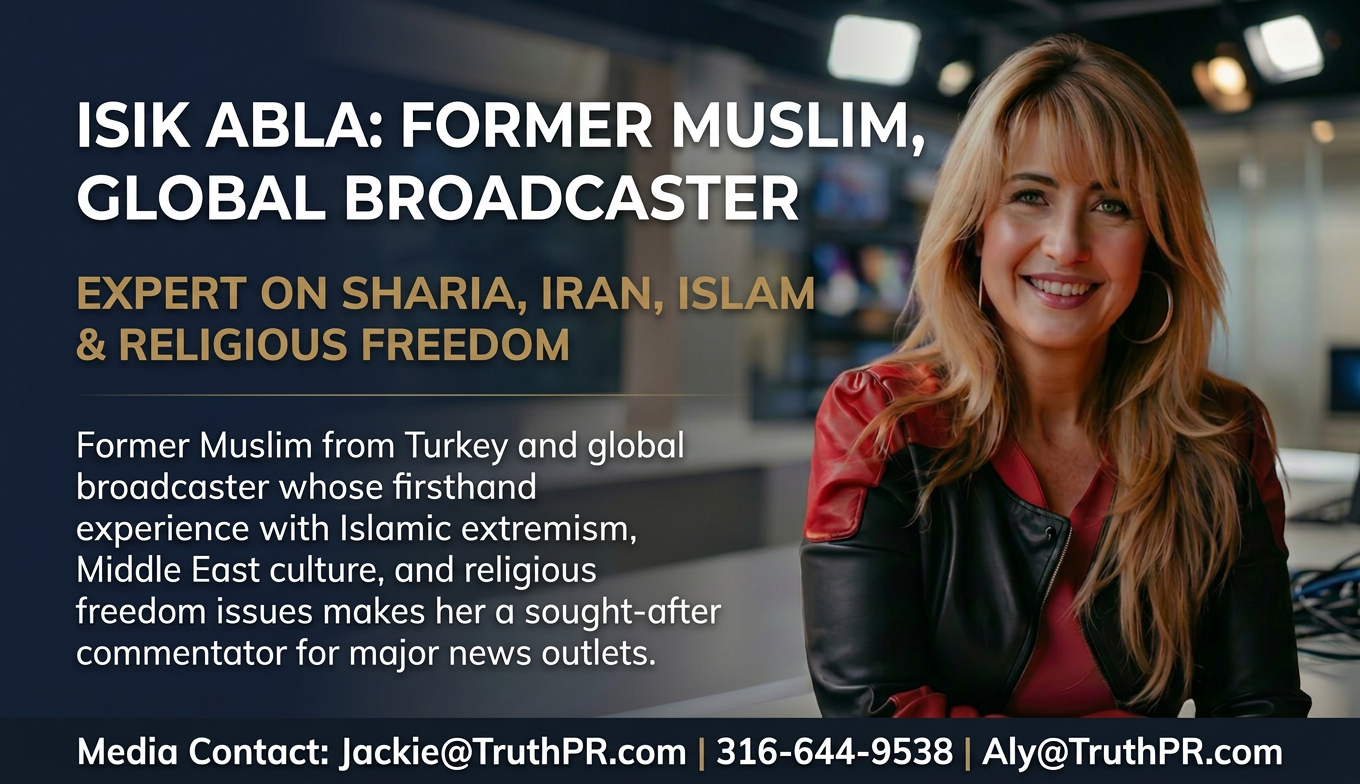
Dr. Isik Abla’s story reads like a front‑page feature: a young woman raised in a strict Muslim home in Istanbul, trapped in a brutal marriage to an extremist, fleeing to America after a near‑fatal attack—and then transforming into a global broadcaster whose insights on Islam, Sharia, Iran, and religious freedom now inform audiences in more than 200 countries.

Read More »
Franc Utoo Header 3

Franc Utoo

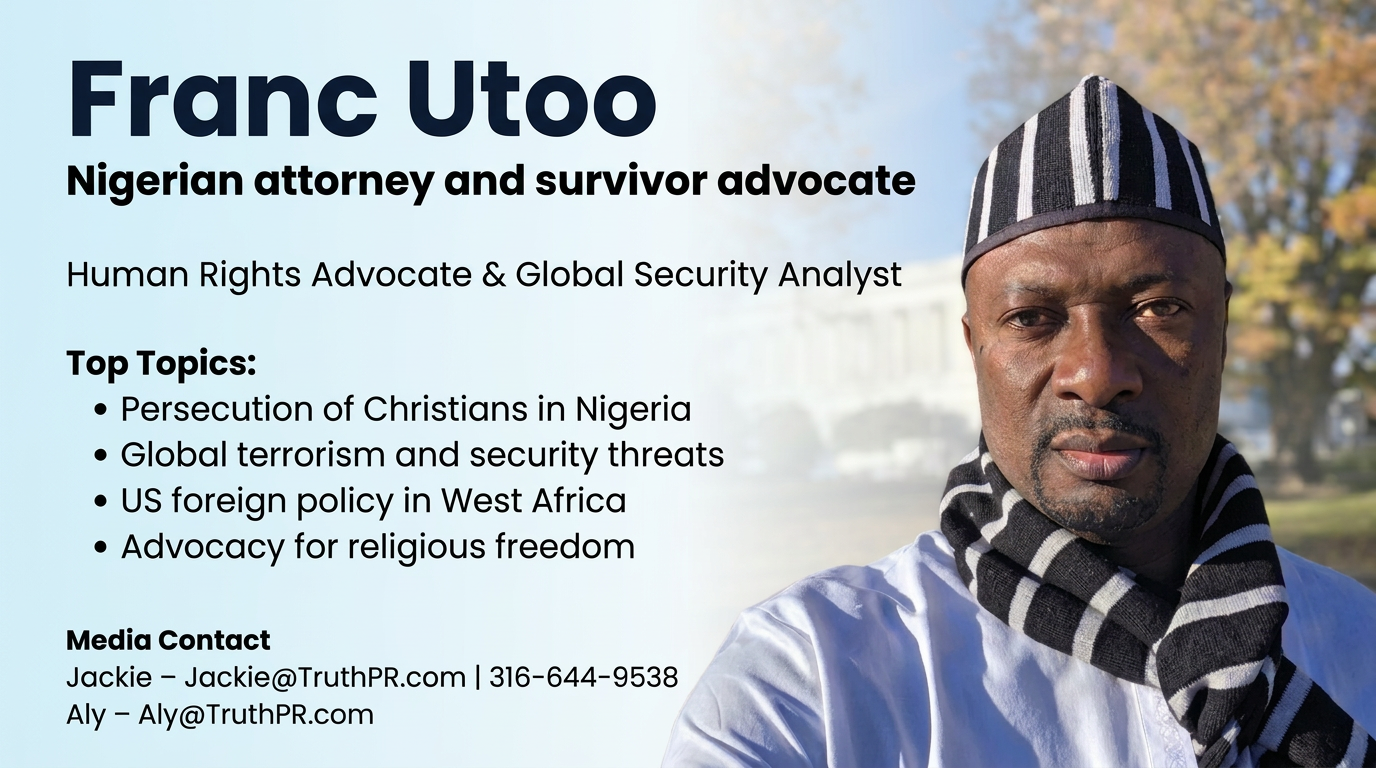
Drawing from his own experience on the front lines of persecution, he offers rare, first‑hand insight into how terrorism, corruption, and weak institutions impact ordinary families across Nigeria and West Africa. Franc’s work centers on elevating the voices of victims—especially women and children—while pressing governments, international organizations, and faith communities to confront atrocities with both courage and accountability.

Read More »
TruthPR dot com Guest Avail Janice Trey

JANICE TREY

Janice Trey is the national spokesperson for SafeMeet.us, a cutting‑edge encrypted communications platform designed to keep private conversations truly private. Drawing on her experience leading a major international media organization and exposing digital surveillance threats, she explains in clear, practical terms why Americans’ calls, texts, and video meetings remain vulnerable—and how SafeMeet.us closes those back doors.

Read More »
TruthPR Guest Judd Saul

Judd Saul

Drawing on firsthand investigations in Benue, Plateau, Taraba, and Yobe states, he exposes the reality of organized “kill zones” where Christians are being driven from ancestral lands through mass killings, kidnappings, and terror tactics that mirror ISIS in the Middle East. Saul explains how Western governments and media have repeatedly misread this violence—hiding behind terms like “farmer‑herder clashes,” “banditry,” or “climate conflict”—and why that misframing fuels weak policy, ignores victims, and emboldens perpetrators of ethno‑religious cleansing.

Read More »
TruthPR dot com Guest Avail Anne Fundner

Anne Fundner

Drawing on real stories and current trends, she exposes how social media, peer pressure, and easy access to fake pills are targeting teens and tweens who would never see themselves as “drug users.” In her compelling presentations, Anne lays out what parents don’t know about fentanyl—but must learn now—equipping audiences with practical questions, safety steps, and language they can use today to protect the kids they love.

Read More »